Will AI Replace You: The Human Cost Revealed
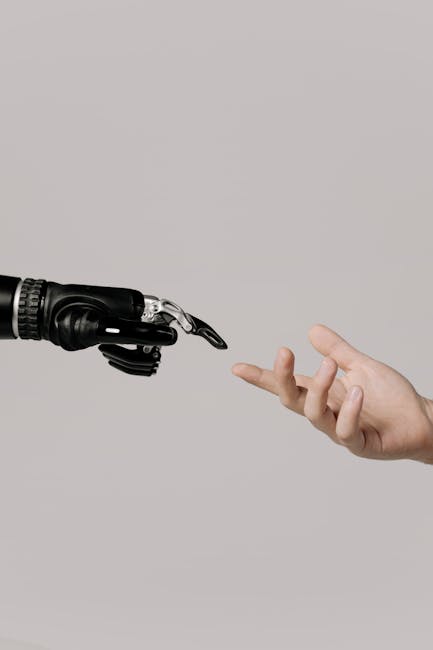 The world is on the cusp of a revolution, one that promises to change the fabric of our daily lives. Artificial intelligence, or AI, is no longer just a concept relegated to the realms of science fiction. It's here, and it's transforming industries at an unprecedented pace. But as we hurtle towards a future where machines can think, learn, and adapt, a fundamental question arises: what does this mean for us, the humans? Will AI replace you, and if so, at what cost?
The answer isn't a simple yes or no. The impact of AI on human life is multifaceted, affecting not just our professional lives but also our daily habits and, perhaps most importantly, our human connections. To understand the depth of this impact, let's delve into the specifics of how AI is changing our world.
Firstly, the workplace is undergoing a significant transformation. AI and automation are increasingly being used to perform tasks that were once the exclusive domain of humans. From customer service to data analysis, machines are proving to be faster, more efficient, and less prone to error. This raises concerns about job security, as many fear that their roles will become obsolete. The truth is, while AI will certainly replace some jobs, it will also create new ones. The challenge lies in preparing the workforce for these changes, ensuring that people have the skills required to thrive in an AI-driven economy.
Beyond the professional sphere, AI is also altering our daily habits. Smart home devices, powered by AI, are making our lives more convenient. They can adjust lighting, temperature, and even security based on our preferences and schedules. Virtual assistants, like Siri and Google Assistant, are becoming integral parts of our daily routines, helping us manage time, remind us of appointments, and even entertain us. But as we become more reliant on these technologies, there's a risk of losing touch with the human element that makes life worth living.
The human connection is perhaps the most critical aspect of this discussion. As we increasingly interact with machines, there's a danger of diminishing our interactions with other humans. Social media platforms, which are inherently driven by algorithms (a form of AI), have already shown us how technology can both unite and isolate us. The question then becomes, how do we balance the benefits of AI with the need for human connection?
The truth is, AI is not inherently good or bad; it's a tool, and like any tool, its impact depends on how it's used. The key to ensuring that AI enhances our lives without replacing the human connection is to design these systems with empathy and understanding at their core. This means creating technologies that augment human capabilities without diminishing our sense of self and community.
Furthermore, as we move forward, it's essential to have open and honest discussions about the implications of AI. This involves not just policymakers and tech industry leaders but also the general public. By understanding the potential risks and benefits, we can work together to create a future where AI serves to enhance our humanity, rather than replace it.
In conclusion, the advent of AI is a double-edged sword. While it holds the promise of unprecedented innovation and efficiency, it also poses significant challenges to our sense of identity and community. The future is not about AI replacing us but about how we choose to use AI to complement our strengths and address our weaknesses. It's a future that requires careful consideration, nuanced understanding, and a commitment to preserving the human connection in a world increasingly influenced by technology.
As we stand at this crossroads, the path we choose will determine not just the course of technological advancement but the nature of our humanity. It's a choice that requires us to be reflective, to consider what makes us human and how we want to live our lives. The change brought about by AI is not good or bad; it's what we make of it. And what we make of it will define us, not just as individuals, but as a society.
The world is on the cusp of a revolution, one that promises to change the fabric of our daily lives. Artificial intelligence, or AI, is no longer just a concept relegated to the realms of science fiction. It's here, and it's transforming industries at an unprecedented pace. But as we hurtle towards a future where machines can think, learn, and adapt, a fundamental question arises: what does this mean for us, the humans? Will AI replace you, and if so, at what cost?
The answer isn't a simple yes or no. The impact of AI on human life is multifaceted, affecting not just our professional lives but also our daily habits and, perhaps most importantly, our human connections. To understand the depth of this impact, let's delve into the specifics of how AI is changing our world.
Firstly, the workplace is undergoing a significant transformation. AI and automation are increasingly being used to perform tasks that were once the exclusive domain of humans. From customer service to data analysis, machines are proving to be faster, more efficient, and less prone to error. This raises concerns about job security, as many fear that their roles will become obsolete. The truth is, while AI will certainly replace some jobs, it will also create new ones. The challenge lies in preparing the workforce for these changes, ensuring that people have the skills required to thrive in an AI-driven economy.
Beyond the professional sphere, AI is also altering our daily habits. Smart home devices, powered by AI, are making our lives more convenient. They can adjust lighting, temperature, and even security based on our preferences and schedules. Virtual assistants, like Siri and Google Assistant, are becoming integral parts of our daily routines, helping us manage time, remind us of appointments, and even entertain us. But as we become more reliant on these technologies, there's a risk of losing touch with the human element that makes life worth living.
The human connection is perhaps the most critical aspect of this discussion. As we increasingly interact with machines, there's a danger of diminishing our interactions with other humans. Social media platforms, which are inherently driven by algorithms (a form of AI), have already shown us how technology can both unite and isolate us. The question then becomes, how do we balance the benefits of AI with the need for human connection?
The truth is, AI is not inherently good or bad; it's a tool, and like any tool, its impact depends on how it's used. The key to ensuring that AI enhances our lives without replacing the human connection is to design these systems with empathy and understanding at their core. This means creating technologies that augment human capabilities without diminishing our sense of self and community.
Furthermore, as we move forward, it's essential to have open and honest discussions about the implications of AI. This involves not just policymakers and tech industry leaders but also the general public. By understanding the potential risks and benefits, we can work together to create a future where AI serves to enhance our humanity, rather than replace it.
In conclusion, the advent of AI is a double-edged sword. While it holds the promise of unprecedented innovation and efficiency, it also poses significant challenges to our sense of identity and community. The future is not about AI replacing us but about how we choose to use AI to complement our strengths and address our weaknesses. It's a future that requires careful consideration, nuanced understanding, and a commitment to preserving the human connection in a world increasingly influenced by technology.
As we stand at this crossroads, the path we choose will determine not just the course of technological advancement but the nature of our humanity. It's a choice that requires us to be reflective, to consider what makes us human and how we want to live our lives. The change brought about by AI is not good or bad; it's what we make of it. And what we make of it will define us, not just as individuals, but as a society.
Read more for the people: Continue Reading
Labels:
SMARTPHONES


No comments:
Post a Comment